Login
See Sample Lessons
PurposeFull People Logo

A Life Skills and Character Education Curriculum for Elementary Schools

Request a Quote

What's Included:

PurposeFull People provides weekly lessons, prevention units, and engaging activities that help elementary schools build a strong school culture and teach essential life skills so students can succeed socially and academically.

  • Weekly, grade-level lessons that teach life skills like self-management, relationship skills, emotion regulation and responsible decision-making.
  • Built by educators for educators, with plug-and-play lessons that are easy to teach and engaging for students.
  • Policy programming lessons include bullying prevention, personal safety and abuse prevention, including Erin's Law, mental health and suicide prevention, substance abuse prevention, and digital citizenship.
  • Engaging videos, activities, games and collaboration opportunities that help students practice skills in real-life situations.
  • Family resources are available to support learning beyond the classroom.
  • Tier 1 slide deck lessons are available in 50+ languages.
  • K–5 Future Ready alignment, with specific Future Ready content in grades 4 and 5.
See Sample Lessons

Easy to Integrate, Proven Results

Easy to Integrate, Proven Results

Over 12,000 schools across the country use CharacterStrong to strengthen school culture, reduce behavior issues, and help students build essential life skills. In this district's story, educators share how implementing PurposeFull People helped transform classrooms from chaos to calm and create an environment where students feel safe, supported, and ready to learn.

Life Skills and Character Traits Students Learn

  • Weekly lessons that teach life skills like self-management, relationship skills, and responsible decision-making
  • Monthly character traits that help students practice values like respect, responsibility, and perseverance
  • Skills students can apply in real situations — managing emotions, solving conflicts, and working with others
  • Vertically aligned lessons from Pre-K through 5th grade so skills build year after year
  • Built-in bullying prevention lessons and resources for students, staff, and families
BE KIND

Social skills and conflict-resolution

sol illustration
respect illustration
empathy illustration
cooperation illustration
BE STRONG

Executive functioning skills like focus, organization, and goal-setting

ida illustration
responsibility illustration
perseverance illustration
courage illustration
BE WELL

Emotional regulation and coping strategies

tre illustration
gratitude illustration
honesty illustration
creativity illustration

Engaging Lessons Students Look Forward To

  • Engaging videos, songs, and activities that help students practice life skills in real situations
  • Short, ready-to-use lessons teachers can implement without extensive prep
  • Interactive games, classroom discussions, and regulation strategies that build relationships and ensure students feel connected and ready to learn
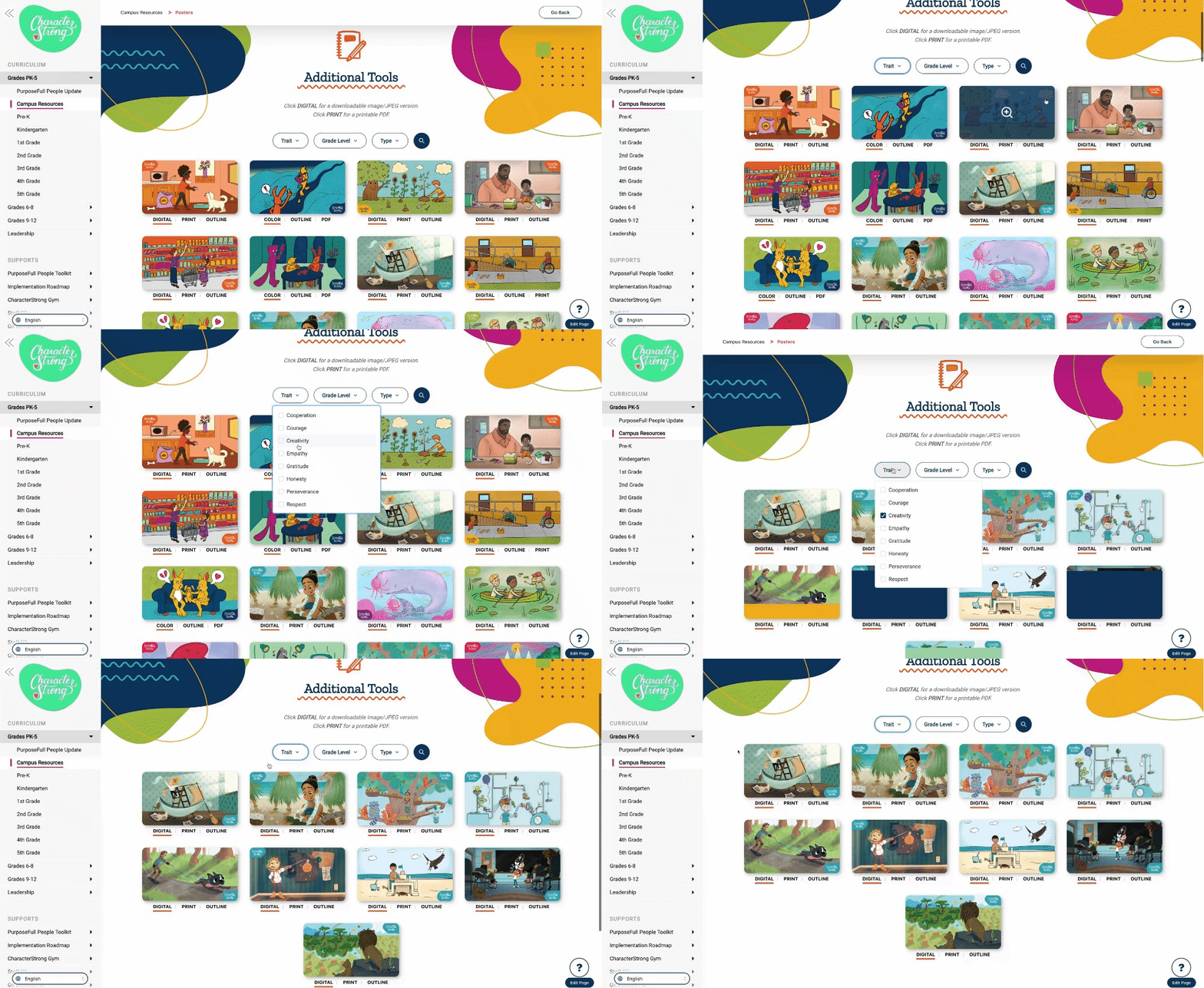
  • Beautiful visuals, posters, and downloadable resources that reinforce learning
  • Designed by educators to maximize engagement while building skills for life success
Check out Sample Lessons
Carousel slide 1
A user navigating through CharacterStrongs campus resources

Everything Schools Need for Successful Implementation

  • Ready-to-teach weekly lessons with Start, Connect, Grow, Respond, and Exit activities in one weekly view
  • Easy-to-project slide decks with "pick up where you left off" functionality
  • Sortable libraries of lessons, videos, songs, and activities
  • Implementation tools and coaching resources for successful launch
  • Family newsletters and take-home resources that extend learning beyond the classroom
  • Flexible implementation options that fit any school schedule
  • Ongoing support from the CharacterStrong team
  • Activities and lessons for the playground, leadership groups, and more
Request a Custom Quote
“Now more than ever educators and families are looking to educate the whole child and CharacterStrong + PurposeFull People delivers with easy-to-implement conversation starters, activities and authentic engagement opportunities.”
Amanda F., Instructional Coordinator

Investment Options

Request a Quote

Builder Package

  • Tier 1
  • Live In-Person PD
  • LoHi
  • On-Demand PD
  • Tier 2
  • Tier 3
MOST POPULAR

Impact Package

  • Tier 1
  • Live In-Person PD
  • LoHi
  • On-Demand PD
  • Tier 2
  • Tier 3

All-In Package

  • Tier 1
  • Live In-Person PD
  • LoHi
  • On-Demand PD
  • Tier 2
  • Tier 3

Common Questions About Life Skills and Character Education in Elementary Schools

Elementary principals, counselors, and district leaders often ask how to teach life skills, strengthen relationships, and create classrooms where every student feels they belong. The questions below explain how schools use CharacterStrong's PurposeFull People curriculum to teach essential skills like emotional regulation, responsible decision-making, and respect while strengthening school culture.

1. If I buy CharacterStrong, do I need to pay extra for bullying prevention or safety units?

No. Bullying prevention and safety lessons are already included in the PurposeFull People curriculum. Many character education or life skills programs require schools to purchase additional units or separate programs to address topics like bullying prevention, digital safety, or child protection. CharacterStrong integrates these important prevention topics directly into the curriculum. PurposeFull People includes bullying prevention lessons, safety units, and child protection instruction across grade levels, helping schools address student well-being while avoiding the need to purchase multiple programs. Because these lessons are built into the curriculum, schools can teach life skills, strengthen relationships, and address important prevention topics through one comprehensive system rather than several separate programs.

2. How do schools implement PurposeFull People?

Schools implement PurposeFull People in a variety of ways depending on their schedule, staffing, and goals. Some schools have school counselors or specialists teach the lessons, while others have classroom teachers facilitate weekly lessons as part of their classroom routines. Many schools combine both approaches, allowing counselors to support teachers while also delivering some lessons directly. CharacterStrong can support schools throughout implementation with a team that includes former educators, school counselors, and school leaders who understand the realities of classrooms. Because the lessons are designed to be plug-and-play and activities are fully flexible, schools can easily integrate PurposeFull People into existing schedules.

3. Does CharacterStrong's PurposeFull People curriculum meet Erin's Law requirements?

Yes. PurposeFull People includes child protection lessons designed to help schools meet Erin's Law requirements. Erin's Law requires schools in many states to provide age-appropriate instruction that teaches students how to recognize unsafe situations, understand personal boundaries, and seek help from trusted adults. CharacterStrong's Safe & Supported lessons helps schools meet these requirements by providing structured lessons that teach students how to:
  • Recognize unsafe situations
  • Understand personal boundaries
  • Identify trusted adults
  • Ask for help when they need support
These lessons are included as part of the curriculum, allowing schools to meet Erin's Law requirements while also strengthening student safety and well-being.

4. How does teaching life skills reduce behavior problems?

Teaching life skills helps reduce behavior problems because many student behavior challenges are connected to skills students are still learning. When students struggle with skills like emotional regulation, conflict resolution, or responsible decision-making, they may respond with frustration, withdrawal, or disruptive behavior. Life skills lessons help students build the tools they need to:
  • Manage emotions
  • Resolve conflicts respectfully
  • Make responsible choices
  • Build positive relationships
Programs like CharacterStrong's PurposeFull People curriculum teach these skills through explicit instruction, discussion, and real-world practice, helping students develop strategies they can use both in and outside the classroom. As students strengthen these skills, classrooms often experience improved relationships, fewer behavior disruptions, and stronger engagement in learning.

5. How can schools reduce chronic absenteeism?

Reducing chronic absenteeism often starts with helping students feel connected and valued at school. Research shows that students are more likely to attend school regularly when they experience a strong sense of belonging, positive relationships with adults and peers, and a school environment where they feel supported. CharacterStrong's PurposeFull People curriculum helps schools strengthen belonging by teaching life skills that support healthy relationships, emotional regulation, build friendships with peers, and experience positive classroom communities. When students feel known, respected, and connected to their school community, they are more likely to attend school consistently and stay engaged in learning. Many schools use character and life skills programs as part of a broader strategy to improve school culture and encourage regular attendance.

6. How can schools prevent bullying?

Preventing bullying requires more than responding after incidents occur. Effective prevention focuses on building a positive school culture and teaching students the skills needed to treat others with respect. Schools can prevent bullying by helping students develop:
  • Perspective-taking skills
  • Model respectful communication
  • Teach conflict-resolution skills
  • Explicitly train on upstander behaviors
  • Provide the confidence to speak up when they see harmful behavior
CharacterStrong's PurposeFull People curriculum includes bullying prevention lessons at every grade level, helping students understand how their actions impact others and how to build healthy relationships. When schools combine clear expectations with life skills instruction and positive relationships, they create environments where kindness, responsibility, and respect become the norm.

7. How do schools teach emotional regulation to elementary students?

Emotional regulation is a skill that students can learn and strengthen over time. Students benefit from direct instruction that helps them understand emotions and practice strategies for responding in healthy ways. Schools can support emotional regulation by teaching students skills such as:
  • Recognizing emotions
  • Calming strategies and breathing techniques
  • Problem-solving during stressful situations
  • Communicating feelings respectfully
PurposeFull People includes lessons that help students develop emotional awareness and self-management strategies, giving students tools they can use when they feel overwhelmed or frustrated. When students learn how to manage emotions, classrooms often see improved focus, stronger relationships, and fewer behavior disruptions.

8. What programs help elementary schools teach life skills and character development?

Many schools use structured programs to help students build life skills and positive character traits. Programs designed for elementary schools often focus on helping students develop skills such as emotional regulation, relationship building, responsible decision-making, and goal setting. CharacterStrong's PurposeFull People curriculum is one example of a program designed specifically for elementary schools. It combines life skills instruction with character development, allowing schools to teach values like respect, responsibility, perseverance, and honesty while helping students practice real-world skills. Because the lessons are designed to be engaging, easy to teach, and aligned across grade levels, many schools use PurposeFull People as part of their broader effort to strengthen school culture and support student success.

9. What is the best character education or life skills curriculum for elementary schools?

The best character education or life skills curriculum helps students build practical skills they can use both in school and in life. Effective programs typically teach skills such as emotional regulation, relationship building, responsible decision-making, goal setting, and conflict resolution. Strong programs also provide structured lessons, engaging activities, and clear implementation guidance so teachers can consistently teach these skills across grade levels. Many schools look for curricula that:
  • Provide weekly lessons aligned across grades
  • Teach both character traits and real-life skills
  • Include bullying prevention and student safety topics
  • Are easy for teachers to implement
  • Help strengthen school culture and student belonging
CharacterStrong's PurposeFull People curriculum is one example of a program designed specifically for elementary schools. It combines life skills instruction with character development, allowing schools to teach traits such as respect, responsibility, perseverance, and honesty while helping students practice real-world skills like emotional regulation and positive communication. Programs like CharacterStrong help elementary schools teach life skills, build positive relationships, and strengthen school culture through structured, engaging lessons.

10. How easy is it for teachers to implement PurposeFull People?

PurposeFull People is designed to be easy for educators to implement, even in busy classrooms. The curriculum includes ready-to-use lessons that teachers can facilitate with minimal preparation. Each lesson includes pre-built slide decks, engaging videos, discussion prompts, and interactive activities, allowing teachers to focus on guiding conversations and building relationships rather than creating materials from scratch. Schools implement the program in a variety of ways depending on their schedule and staffing. In some schools, classroom teachers facilitate the lessons weekly, while in others school counselors or specialists lead instruction and support classroom teachers. Because the lessons are designed to be clear, engaging, and easy to teach, schools can implement PurposeFull People consistently across classrooms while helping students develop important life skills such as emotional regulation, relationship skills, and responsible decision-making. This flexible approach allows schools to strengthen classroom culture and teach life skills without placing additional burden on teachers.